Learning Space Scenarios That Reflect 13 Dynamic Trends Impacting the Future of Education
Emerging trends will change how teachers teach, how students learn, how planners plan, and how learning spaces transform. The following four scenarios are not predictions, but rather colorful illustrations of what might result when various emerging trends intersect. Each scenario mixes three to five trends. The result is a focus on what could begin to appear in teaching and learning spaces – physical, virtual, and blended – very shortly. These scenarios differ from the standard “classrooms of the future” we’ve read about. They pose “what if visions that can help organizations take actions now and provide insights into adapting to variations on the themes.
MAKER CO-LEARNING SPACES
- INTERSECTING TRENDS
Maker Movement Social and Peer Learning Design Thinking Entrepreneurship
LEARNING SPACE PROFILE
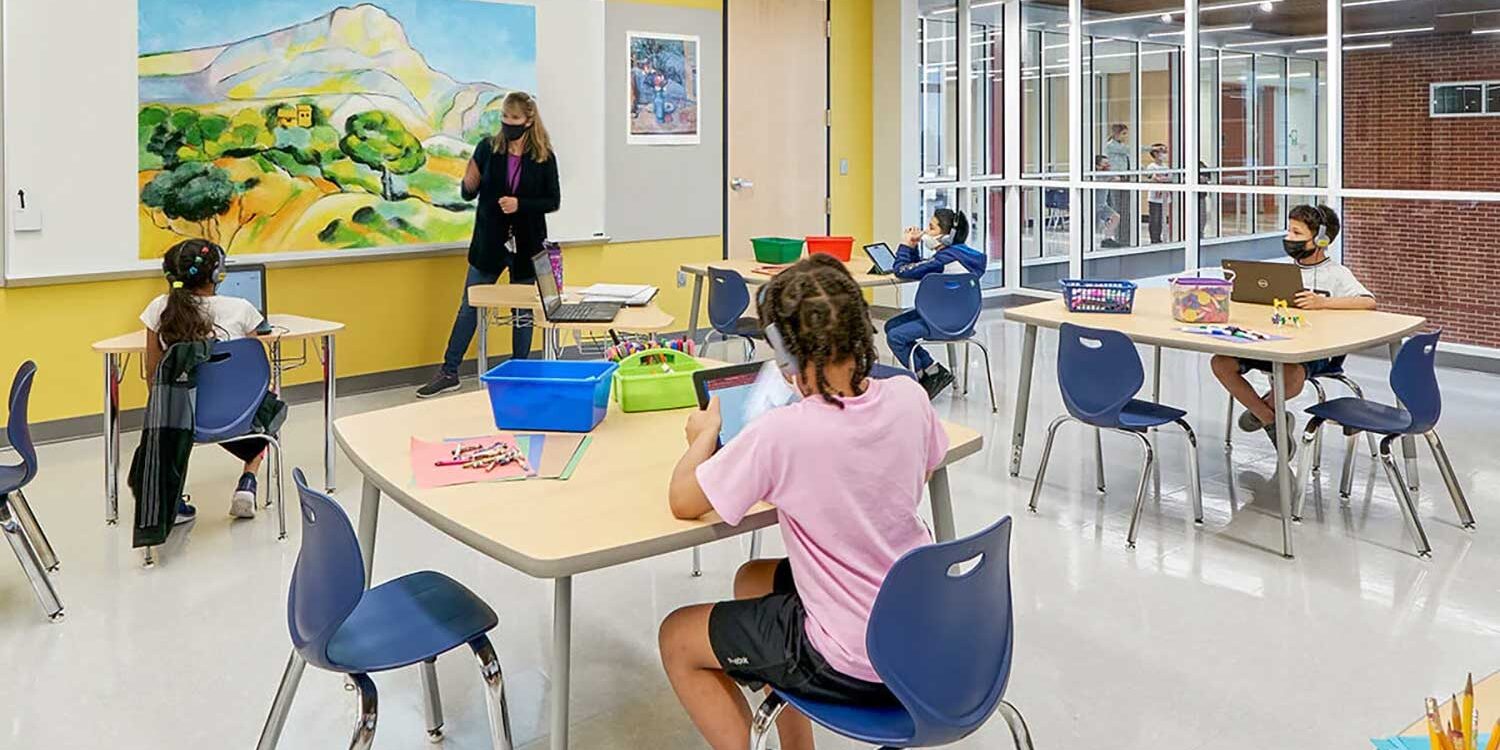
Design-oriented, maker co-learning spaces are constructed and filled to maximize creativity, interaction, and problem-solving. These flexible spaces need to accommodate materials relevant to problems that groups of students are working on. Storage and quick access to a wide variety of materials will also be necessary.
BOUNDARYLESS LEARNING SPACES
INTERSECTING TRENDS
- Personalized Learning
- Collaborative, Project-Based Learning Blended Learning
LEARNING SPACE PROFILE
Students engage in a wide variety of locations, across disciplines, outside of traditional learning hours, and frequently off campuses entirely. Learning spaces will become optimized as interactive environments and project spaces. Students will move in and out of group projects based on how they see their total learning experience evolving.